
Back To Blogs
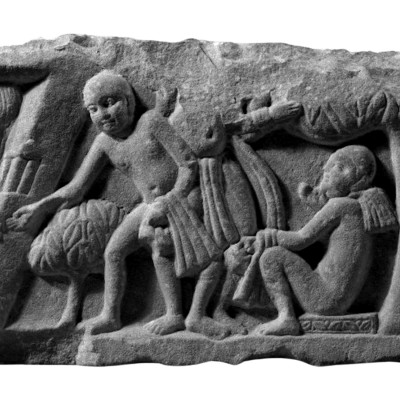
Jain Narrative Relief Panel, mid 2nd century BCE.-1st century CE (18.4 x 61.6 cm) Brooklyn Museum, provided under CC BY 3.0 license.
Decolonizing Jain Studies, Part 1
Contextualizing the Field and the Call for Cultural Accountability
10/22/2025
Retrospective
Previously, I have discussed many features of Jain studies in the modern academy, such as the major contributions of Western philologists, the rise of “engaged Jainism” as a constructive scholarly approach, and the challenges of inclusivity and representation faced by Indian Jain scholars. In my earlier blog post, “Western Scholarship on Jain Studies: Contributions, Critiques, and Collaborations,” I outlined the ways in which Western academic engagement with Jainism has both broadened access to Jain texts and ideas and simultaneously risked distorting or marginalizing indigenous voices. While acknowledging the value of textual analysis and comparative religious studies, I emphasized that these must be balanced with greater attention to lived traditions, vernacular perspectives, and the structural inequalities embedded in the global academic system. That post also explored how colonial legacies—such as the privileging of Euro-American methodologies and the ongoing marginalization of Indian-language scholarship—continue to shape the field. In all these respects, the question of decolonization was already implicit, if not central.
Previously, I have discussed many features of Jain studies in the modern academy, such as the major contributions of Western philologists, the rise of “engaged Jainism” as a constructive scholarly approach, and the challenges of inclusivity and representation faced by Indian Jain scholars. In my earlier blog post, “Western Scholarship on Jain Studies: Contributions, Critiques, and Collaborations,” I outlined the ways in which Western academic engagement with Jainism has both broadened access to Jain texts and ideas and simultaneously risked distorting or marginalizing indigenous voices. While acknowledging the value of textual analysis and comparative religious studies, I emphasized that these must be balanced with greater attention to lived traditions, vernacular perspectives, and the structural inequalities embedded in the global academic system. That post also explored how colonial legacies—such as the privileging of Euro-American methodologies and the ongoing marginalization of Indian-language scholarship—continue to shape the field. In all these respects, the question of decolonization was already implicit, if not central.
What is “Decoloniality?”
Decolonization, in its deepest sense, is not merely a political or historical process of ending formal colonial rule; it is a profound ethical, cultural, and epistemological undertaking that seeks to dismantle the enduring structures of domination, erasure, and control that colonialism left behind. In the context of academic disciplines like Jain studies, decolonization involves recognizing how Western systems of knowledge—shaped by centuries of economic exploitation, military conquest, political subjugation, and cultural imperialism—have positioned themselves as normative and universal, marginalizing or invalidating other ways of knowing and being. The colonial project was not just about land and resources; it was about reshaping the very imagination of the colonized. Western colonial powers imposed their languages, religions, systems of education, aesthetic values, and philosophical categories upon the societies they dominated, often under the paternalistic guise of “civilizing” the other. These patterns continue today in subtler but no less insidious forms—through global capitalism, military intervention, cultural exports like media and fashion, and the prestige and authority of Western academic institutions.
Decolonization, in its deepest sense, is not merely a political or historical process of ending formal colonial rule; it is a profound ethical, cultural, and epistemological undertaking that seeks to dismantle the enduring structures of domination, erasure, and control that colonialism left behind. In the context of academic disciplines like Jain studies, decolonization involves recognizing how Western systems of knowledge—shaped by centuries of economic exploitation, military conquest, political subjugation, and cultural imperialism—have positioned themselves as normative and universal, marginalizing or invalidating other ways of knowing and being. The colonial project was not just about land and resources; it was about reshaping the very imagination of the colonized. Western colonial powers imposed their languages, religions, systems of education, aesthetic values, and philosophical categories upon the societies they dominated, often under the paternalistic guise of “civilizing” the other. These patterns continue today in subtler but no less insidious forms—through global capitalism, military intervention, cultural exports like media and fashion, and the prestige and authority of Western academic institutions.
In this context, scholars have a moral and intellectual responsibility to interrogate the frameworks they inherit and reproduce. Academic knowledge does not exist in a vacuum; it is shaped by histories of power and continues to participate in those dynamics. In fields like Jain studies, the voices that are amplified, the methods that are valorized, and the questions that are deemed important are often determined by Western-trained scholars, many of whom are culturally or geographically removed from the communities they study. Without a commitment to decolonization, this dynamic can reproduce a subtle form of epistemic violence—wherein living traditions are interpreted, represented, and judged according to foreign standards that may not serve, or may actively harm, the tradition’s own integrity and survival. In the face of accelerating cultural homogenization, where indigenous lifeways are being eclipsed by globalized Western norms, the role of the scholar cannot remain one of detached neutrality. Especially when engaged with traditions that are marginalized or endangered, scholars must approach their work with humility, solidarity, and a commitment to cultural preservation. This requires not only intellectual rigor, but also ethical reflexivity and the courage to confront the privileges and assumptions embedded in the academy itself. “Decolonizing Jain studies” means cultivating practices that support the self-representation, flourishing, and sovereignty of Jain communities on their own terms.
In the following three-part blog post, I want to expand directly on that theme: the decolonization of academic Jain studies. Specifically, I will argue that scholars in this field bear a responsibility not only to produce accurate or sophisticated interpretations of Jain texts and practices but also to help ensure the survival of marginalized Jain traditions. This is no small task in a time when traditional South Asian cultures, practices, and even languages are disappearing at a shocking rate—often replaced by dominant Western modes of thought, lifestyle, and expression. That replacement is not incidental; it is the result of a global cultural hegemony rooted in centuries of Western imperialism and colonization. In such a context, Jain studies cannot remain a neutral or purely scholarly pursuit. It must also become a critical site for advocacy, solidarity, and cultural preservation. This blog series will outline concrete strategies for scholars to engage in such work and reflect on what it means to take seriously the ethical and epistemological implications of decolonization within the study of Jainism.
If you are interested in learning more on this topic, consider the Master of Arts in Engaged Jain Studies—a fully-online graduate program offered by Claremont School of Theology (CST). Arihanta Institute faculty are engaged at CST as Adjunct Faculty members under an academic agreement, contributing their expertise and teaching courses within this concentration. Learn More.
Cogen Bohanec, MA, PhD holds the position of Assistant Professor in Sanskrit and Jain Studies at Arihanta Institute where he teaches various courses on Jain philosophy and its applications. He received his doctorate in Historical and Cultural Studies of Religion from the Graduate Theological Union (GTU) in Berkeley, California where his research emphasized comparative dharmic traditions and the philosophy of religion. He teaches several foundational self-paced, online courses based in Jain philosophy, yoga, ecology, languages, and interfaith peace-building, including: