
Are Jains anti-vegan?
Back To Blogs
Are Jains anti-vegan?
04/28/2026
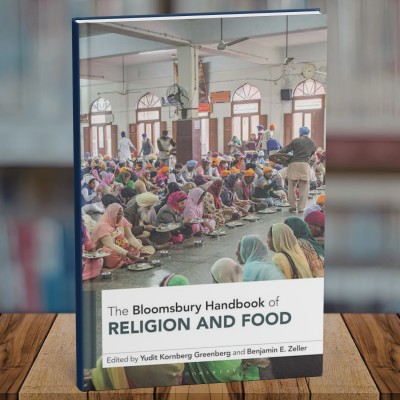
Are Jains anti-vegan? This is a question I have been asked many times since publishing a chapter about Jain anti-veganism in The Bloomsbury Handbook of Religion and Food (Greenberg and Zeller 2026; see chapter 17 here).
I was inspired early on to advocate for veganism within the Jain community when the Jain Center of Southern California became the first fully vegan Jain center in the world through the advocacy of Dr. Jasvant Modi (only to be disappointed when other leadership reversed this policy in 2025), and was further inspired by groups like the Jain Vegans in the UK and the global Jain Vegan Initiative. These inspirations caused me to publish an article with my colleague Jonathan Dickstein in 2021 outlining the contours of Jain veganism.
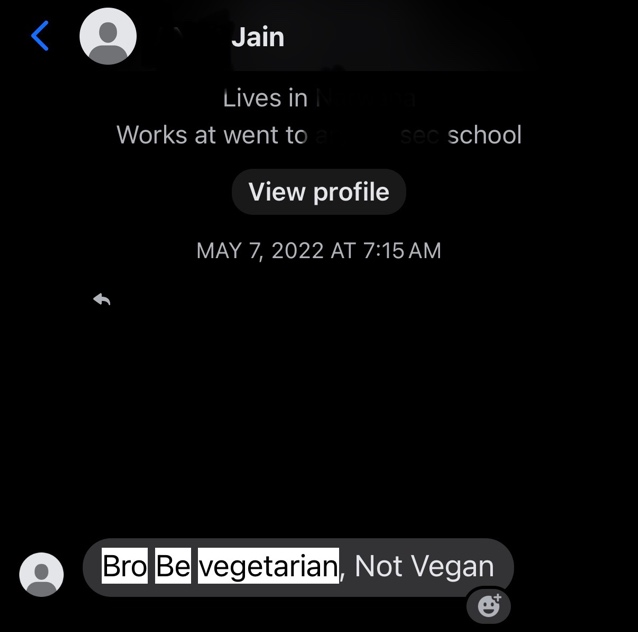
The question as to why some Jains are actually anti-vegan, however, emerged for me when I began to experience Jains arguing against veganism during my advocacy for giving up dairy within the community. One morning in May 2022 during my early years of vegan advocacy with these groups, for example, I woke up to a message from a Jain acquaintance in India who wrote to me on Facebook, “Bro Be Vegetarian, Not Vegan” (name and location censored here for anonymity):
While this was a rather gentle message that arrived while I had been engaging in online, pro-vegan animal advocacy with the Jain Vegan Initiative, I have witnessed much harsher anti-veganism within the Jain community. And while Jain anti-veganism initially surprised me given the incredible violence inflicted globally by the dairy industry, as I later dug into the psychology of anti-veganism, I realized that those Jains who were arguing against veganism were participating in broader global anti-vegan discourses that had already been at least partially shaped for them.
As I show in my new chapter titled “Interpreting: Jain Veganism in Dialogue with Jain Vegetarianism - Instrumentalizing Jain Scriptures in Global Debates,” Jains, who are primarily lacto-vegetarians, are indeed not fully unique in their anti-veganism, which in fact reflects, in many ways, common anti-vegan discourse produced by media giants and social media influencers from the powerful dairy and meat industries.
What is unique about Jain anti-veganism, however, are the ways that Jains simultaneously draw from their scriptural traditions to justify the continued consumption of dairy, and thus unimaginable violence toward cows, their babies, and the environment globally. Jain anti-veganism thus combines both Jain and non-Jain influences.
Some specifically Jain anti-vegan arguments that I highlight in my new chapter include, for example, that the first Jina Ṛṣabha invented animal husbandry and, therefore, Jains do not have the authority to argue against his decree that humans can use animals to obtain food that is grounded in his omniscience. Another is how Mahāvīra’s disciple Gautama miraculously produced and served khīr (rice pudding) to monks to help them break their fast, and since these holy figures consumed this dairy product, Jains should be able to do so today. These and other scriptural arguments find themselves at the center of Jain anti-veganism, along with cultural arguments that insist that Jains have been consuming dairy for thousands of years and should not have to stop now.
While Jains who argue against veganism use their own scriptures to do so, they also draw from arguments made more widely in transnational anti-vegan discourse such as “cows will go extinct if we don’t drink milk,” “factory farming can be repaired,” “I only get my milk from local dairies,” “veganism is a privileged, colonial, white, western conspiracy,” “plants feel pain too,” “I need milk for my health,” and the list goes on… I don’t have the space to debunk each of these arguments here but suffice it to say that others have already done so extensively here and here, for example.
In addition to all of these debunked anti-vegan arguments, the public scientific data indicating that a plant-based world is the only viable path forward to avoid climate collapse forces us all to confront our lifestyle and dietary choices in uncomfortable ways.
Vegans make others uncomfortable
And that is precisely why vegans are so detested. Among social groups globally, ethical vegans are indeed one of the most stigmatized and discriminated social groups for continually pointing out uncomfortable truths. Activists and scholars have referred to this stigmatization and discrimination as “vegaphobia.”
A 2015 study by MacInnis and Hodson famously demonstrated, for example, that compared to immigrants, blacks, homosexuals, atheists, vegetarians, and drug addicts, only drug addicts were viewed worse than vegans. Reflecting broader trends in political psychology, those affiliated with right-wing political movements were among the most discriminatory, though there is significant discrimination against veganism on both the left and right.
Even though most Jains are vegetarian themselves and commit to vegetarianism for the purpose of nonviolence (ahiṃsā), they nevertheless share these transnational anti-vegan sentiments. My new article focuses on the psychological causes of Jain anti-veganism, demonstrating how it fits within broader transnational cognitive dissonance alleviation strategies identified in the field of human-animal relations.
Why cognitive dissonance alleviation?
While participating as a student in a course called “Beyond Vegetarianism” taught by the Jain Vegan Initiative, Sunny Jain shared that one of the primary obstacles that Jains advocating for veganism within the community faced was “cognitive dissonance,” which he defined as follows:
“In the field of psychology, cognitive dissonance is the perception of contradictory information, and the mental toll of it. Cognitive dissonance is typically experienced as psychological stress when persons participate in an action that goes against one or more of those things. According to this theory, when two actions or ideas are not psychologically consistent with each other, people do all in their power to change them until they become consistent. The discomfort is triggered by the person’s belief clashing with new information perceived, wherein the individual tries to find a way to resolve the contradiction to reduce their discomfort.”
This kind of cognitive dissonance and the alleviation strategies that accompany it – referred to as ‘doublethinking’ by Kathryn Gillespie (who borrows from George Orwell) – is experienced by most all animal advocates who have to carefully tip-toe around carnists’ and vegetarians’ strong speciesist biases as they advocate for people to consider giving up the consumption of animal flesh and secretions. That is to say, in order to effectively advocate for animals, vegans must understand human psychology as it pertains to the rigid defenses of human belief and practices surrounding animal consumption.
For Jain vegans, this presents a particular challenge to understand how vegetarians, who, like vegans, are already committed to not eating meat for reasons of ahiṃsā and compassion, are still willing to so strongly defend their consumption of dairy, which inflicts even worse harm than the meat industry itself on animals.
Because they are committed to nonviolence and compassion, vegetarian Jains who argue against veganism must make arguments to alleviate the uncomfortable cognitive dissonance that their continued dairy consumption creates in light of these undeniable harms of dairy. In my chapter, I outline some of the scriptural arguments that are made to do so, which draw from Jain scriptural narratives to tenuously argue for dairy’s continued consumption despite its known harms. Doing so, as I show, serves to alleviate the discomfort of cognitive dissonance so that Jains’ dairy consumption can continue without producing psychological discomfort (shame, guilt, etc.)
What can psychology, food studies, and critical animal studies tell us about Jain vegetarians’ anti-veganism?
While previous studies of cognitive dissonance alleviation focused on meat eaters, recent psychological studies have tried to understand vegetarian cognitive dissonance alleviation strategies to demonstrate why vegetarians advocate for the continued consumption of animal secretions such as dairy despite dairy’s known harms (see, for example, Ioannidou et al. 2024).
As a scholar of engaged Jain studies who has published in the field of food studies, I am trained to critically analyze how foodways – ways of producing, preparing, serving, and consuming food, for example – are culturally constructed to reflect, reinforce, and sometimes challenge hegemonic social practices, beliefs, and identities. I am also trained to recognize that what we eat together cultivates commensality: the ritual act of eating in community that reinforces social bonds and identities as well as what we consider, from a cultural perspective, to be “food.”
As is well known in the field of critical animal studies, speciesism and carnism are two of the primary social ideologies that routine experiences of commensality reinforce. Speciesists and carnists arbitrarily attribute little to no moral value to certain animals to assert their edibility. For example, dogs, cats, cows, and pigs are arbitrarily exempt in some cultures from edibility while simultaneously killable and edible in others. Broadly speaking, these ideologies enable the routine forced impregnation, torture, and killing and consumption of approximately 80 billion land animals globally every year, almost all of which takes place in factory farms.
Speciesism and carnism therefore contribute to the everyday human rituals of consuming animal body parts and secretions to experience commensality. Jains have for centuries encouraged society to stop consuming meat in these human rituals, though they have themselves simultaneously continued to consume dairy.
Indeed, through the routine use of dairy in their foodways, Jain vegetarians reinforce their community’s belief that bovine mammary secretions are food, and in doing so participate in socially constructed foodways that subject millions of female cows and their babies to forced impregnation, torture, and death in the dairy and meat industries every year.
Because knowing that one is participating in this violence by consuming dairy can create such immense psychological discomfort, vegetarians will quickly pivot to cognitive dissonance alleviation strategies when confronted by those advocating for veganism.
In short, people will reach for any argument they can think of to continue to participate in systems that harm animals. My chapter outlines some of these alleviation strategies as they occur in the Jain community itself, even as they reflect transnational anti-vegan discourse more broadly.
Conclusion – where do we go from here?
As a scholar of engaged Jain studies who works closely with the Jain community to help them understand how to apply their principles in everyday life, I wish to lay the psychological strategies discussed in my chapter bare so that Jains can make less harmful, more conscientious choices in the construction of their community foodways.
That being said, I know that when pointing out the harms in others’ foodways and lifestyles, that vegan animal advocates are routinely confronted by, and become the source for, others’ psychological discomfort. This can happen simply by being in the same room with others who know that we are vegan. It is not our intention to cause harm, but in fact to reduce it by helping others understand the impacts of their dietary and lifestyle choices on animals, the environment, and even humans themselves.
Nevertheless, because vegans are a small minority both within and outside the Jain community, they become an easy target for pushback, harassment, and, at times, discrimination. They are, as I mentioned at the beginning of this article, one of the most stigmatized and discriminated social groups. Knowing this, if you are committed to nonviolence, compassion, and justice, please support vegans even if you are not vegan yourself. We are only asking others to be far kinder, far less environmentally destructive, and far more aware than most are willing to be.
As a scholar of engaged Jain studies engaging with the fields of human-animal relations, food studies, and critical animal studies in my recently published article, there is one piece of hope I can offer us moving forward: we know as scholars that foodways are socially constructed, that traditions can and always do change, and that given enough knowledge, some people can and do give up dairy (and meat, eggs, honey, and other animal products as well). Others may not due to the social stigma attached to veganism as well as the massive amounts of misinformation produced by animal agriculture industries, and we have to acknowledge that too.
Knowledge of the harms of dairy must, in any case, first touch people’s hearts, so much so that they are willing to drop their concern for the social stigma that they will inevitably face when they decide to become vegan, because they know in their hearts giving up dairy is the right thing to do.
Finally, in my experience and ongoing research, I want to acknowledge that many vegetarian Jains who have not yet transitioned to veganism are supportive of veganism, rather than against it, and for that I am grateful. I appreciate their support and honesty.
And it is those who are against veganism that I, and all animal advocates, direct our message in the hopes that their hearts will change. After all, Jainism is famous for its commitment to ahiṃsā, not just through words, but through correct conduct. And that practice repeats itself at least three times per day at the table and at every Jain center and temple around the world.
As vegan and vegetarian Jains often like to say, “Be the change you wish to see in the world.” And to my kind Jain friend on Facebook, I am sorry for my late reply, but please Bro Be vegan, Not Vegetarian.
If you are interested in food studies, critical animal studies, and understanding anti-vegan psychology, join our graduate student community in Claremont School of Theology’s fully online graduate program in Engaged Jain Studies.
Christopher Jain Miller, is the co-founder, Vice President of Academic Affairs, and Professor of Jain and Yoga Studies at Arihanta Institute. He completed his PhD in the study of Religion at the University of California, Davis and is also a Visiting Researcher at the University of Zürich's Asien-Orient-Institut and Adjunct Professor at Claremont School of Theology where he co-developed and co-runs the fully-online MA-Engaged Jain Studies graduate program.