

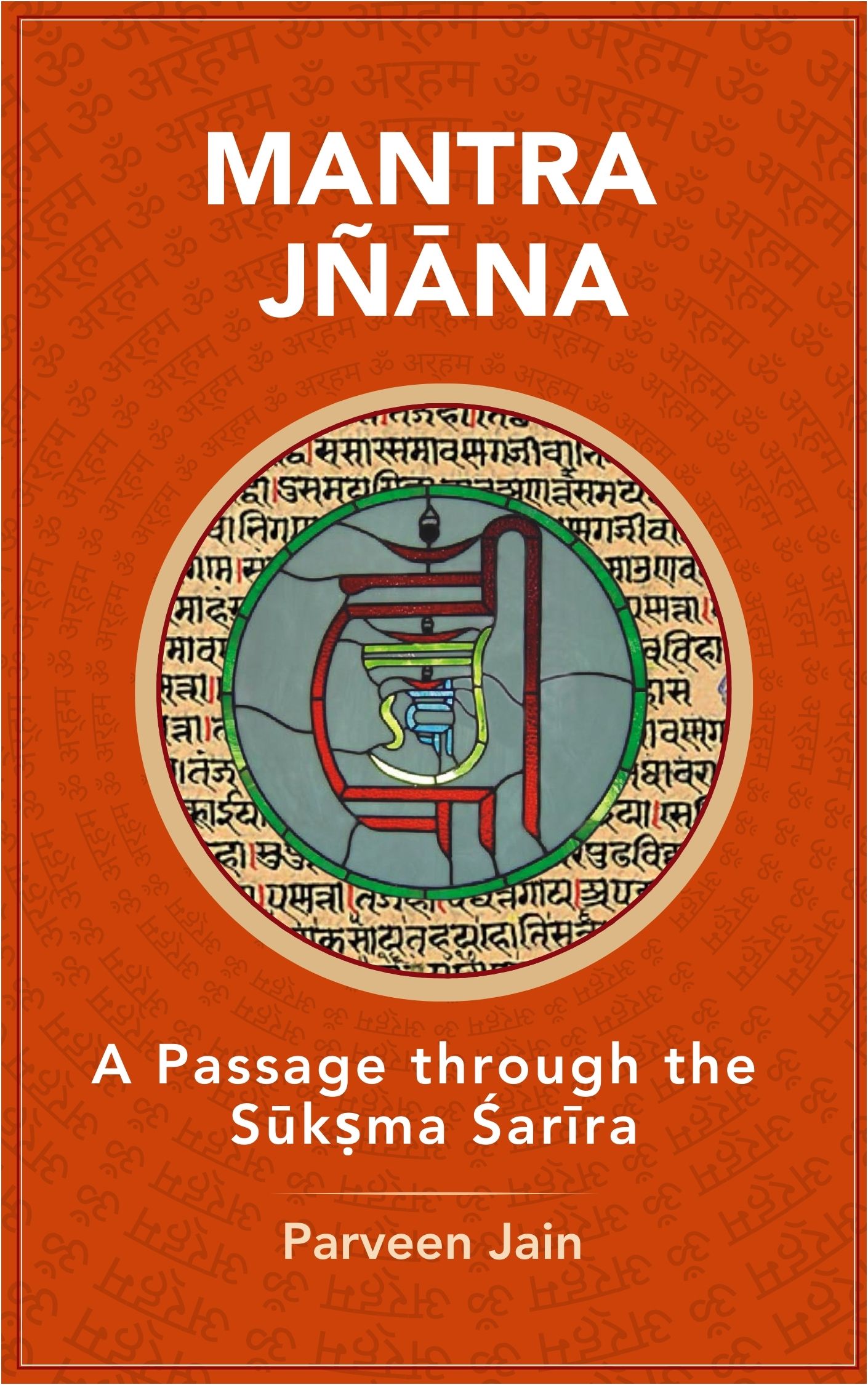


Mantra Jñāna: Passage through the Sūkṣma Śarīra
Based on the Writings and Discourses by Ācārya Sushil Kumar
By Parveen Jain, PhD
By Parveen Jain, PhD
Edited by Cogen Bohanec, PhD
Mantra Jñāna: Passage through the Sūkṣma Śarīra is now available for purchase.
Mantra Jñāna: Passage through the Sūkṣma Śarīra, the latest book authored by Dr. Parveen Jain, offers a comprehensive exploration of Jain mantra philosophy and its impact on the subtle body. Based on the teachings of Ācārya Sushil Kumar, the book delves into the metaphysics of language and the transformative power of mantras in spiritual progression. The text elaborates on how mantras interact with the subtle body, known as the sūkṣma śarīra, to produce profound effects on personal conduct and spiritual development. Mantras are depicted as instruments for awakening inner spiritual energies and harmonizing the practitioner's consciousness with universal truths. The book also highlights the intricate relationships between sound, light, and color in the context of mantra practice, based on Ācārya Sushil Kumar’s discourses, emphasizing the interplay between phonemes and the fundamental elements of nature – earth, fire, wind, water, and space (dravya-tattvas: pṛthivī, agni, vāyu, jala, ākāśa)—also called pañca-dravyas or pañca-bhūtas.
Ācārya Sushil Kumar explains how through mantra recitation, practitioners can access divine energies and progress towards liberation by invoking cosmic vibrations. By providing insights into the science of mantra creation, the text investigates how practitioners engage in mantra sādhana to elevate their consciousness and achieve spiritual enlightenment. Mantra Jñāna serves as a valuable resource for understanding Jain philosophy and the spiritual benefits of mantra practice. Ultimately, this book stands as both a source of inspiration for spiritual practice among practitioners and an essential case study of Jain mantra and language theory for scholars.
The Formation of a Word from a Thought to Verbal Articulation and Contemplation
As elaborated in this book, Ācārya Sushil Kumar explains the process, when we think of a word to contemplate or utter, there is an intriguing and structured process within our body, mostly at the subtle body (sūkṣma śarīra) level that is triggered at the first thought of what we contemplate or want to say. The outcome of this process has direct implications on our actions in mind, body, and speech. The process is elaborated in this book, but here is an abbreviated overview.
In the subtle body (sūkṣma śarīra) realm, every cognitive action or occurrence, whether during contemplation or otherwise, creates a speckle of powerful vital energy (ūrjā) at the mūlādhāra, the root cakra, located just above the tailbone. This speckle of ūrjā transforms into a pulsation (spandana) invigorated by an energy that is a replication of that sensed as emitting from the earth element (pṛthivī dravya-tattva) by virtue of the relationship between pṛthivī dravya-tattva and mūlādhāra. From there, the pulsation rises and strikes the sacral cakra (svādhiṣṭhāna) located a little bit above mūlādhāra and in the middle of the bladder and the uterus for women and prostatic utricle for men. Here it gathers an energy that is a replication of that sensed from the water element (jala dravya-tattva) by virtue of the relationship between sacral cakra and jala dravya-tattva. Then the pulsation moves on to the solar plexus cakra (maṇipūra). At the maṇipūra cakra, it gets energized with an energy that is aligned with the fire element (agni dravya-tattva) due to the relationship between maṇipūra and agni dravya-tattva. Finally, it arrives at the heart cakra (anāhata) and picks up an energy that is a replication of that sensed from the wind element (vāyu dravya-tattva) due to the relationship between anāhata and vāyu dravya-tattva. Then, the pulsation gets buoyed and gathers the ability to move up. At this stage, depending on the demeanor and spiritual state of the practitioner, it either acquires audible characteristics that can take extroverted vocalized form (vaikharī) – āhata form – or transforms into an internalized contemplative sensation (paśyantī) in anāhata form. For the rarest of the advanced practitioners who have undergone extended intense perseverance, the pulsation takes the form parāvāṇī, the ultimate, most blissful internalized state involving silent recitation. In all of these cases, the pulsation draws an energy that is a replication of that which is sensed from the space element (ākāśa dravya-tattva) and ultimately merges with it.
The movement of pulsations occurs in scientifically unmeasurable short duration of time—a few instances of samaya, the smallest conceivable unit of time from a dharmic perspective. It is not noticeable by ordinary individuals but could become perceptible to highly learned spiritualists like advanced ascetics (ṛṣis and yogīs).
The state of mind and quality of thoughts play catalytic roles in how these pulsations get transformed at the heart cakra. The formation of the types of letters or words (akṣaras or śabdas) depends on the quality of the cognitive actions or thoughts, and at the same time, conversely, the quality of the thoughts depends on the words being contemplated. In that sense, words and thoughts form a positive feedback mechanism for each other. When we begin in a state of anger, contempt, or other regressive sentiments, the pulsations that initiate from the mūlādhāra and rise from the heart cakra to transform into audible sound could become a speech conveying contempt or hatred as it passes from the heart to the throat and finally exits from the mouth. However, at the same time, even if the initial demeanor is regressive but the practitioner manages to redirect it to a wholesome state of mind and thinks of spiritually auspicious words, such as oṃ or the Ṇamokār Mantra, the demeanor could start transitioning to a virtuous tone, or possibly to an audible rendering of the mantra. When the process begins with a spiritually conducive demeanor in a meditative state (dhyāna) or a devotional state (bhakti), the thoughts trigger pulsations that transform into mantras in spoken or contemplative forms. In such a practice, the aspirant would attain an exhilarating state of spiritual elation and enjoy the spiritual beauty of the inner self.
As explained by Guru Jī in his writings, and presented by the author, Dr. Parveen Jain in this book, the transformation of thoughts into effective mantras that yield the results sought by a practitioner is a highly intricate process that is proficiently and carefully structured by learned spiritualists and ascetics (yogīs, ṛṣis and ācāryas) over the ages with intense research, validation, and practice. This rigorous, exhaustive, and iterative process parallels the methods deployed in modern science, except that the mantra creation is a millennia-old contemplative discipline at the level of consciousness, whereas scientific investigations are carried out at the physiological and largely material level.
Mantra Jñāna: Passage through the Sūkṣma Śarīra is now available for purchase.
Ācārya Sushil Kumar explains how through mantra recitation, practitioners can access divine energies and progress towards liberation by invoking cosmic vibrations. By providing insights into the science of mantra creation, the text investigates how practitioners engage in mantra sādhana to elevate their consciousness and achieve spiritual enlightenment. Mantra Jñāna serves as a valuable resource for understanding Jain philosophy and the spiritual benefits of mantra practice. Ultimately, this book stands as both a source of inspiration for spiritual practice among practitioners and an essential case study of Jain mantra and language theory for scholars.
The Formation of a Word from a Thought to Verbal Articulation and Contemplation
As elaborated in this book, Ācārya Sushil Kumar explains the process, when we think of a word to contemplate or utter, there is an intriguing and structured process within our body, mostly at the subtle body (sūkṣma śarīra) level that is triggered at the first thought of what we contemplate or want to say. The outcome of this process has direct implications on our actions in mind, body, and speech. The process is elaborated in this book, but here is an abbreviated overview.
In the subtle body (sūkṣma śarīra) realm, every cognitive action or occurrence, whether during contemplation or otherwise, creates a speckle of powerful vital energy (ūrjā) at the mūlādhāra, the root cakra, located just above the tailbone. This speckle of ūrjā transforms into a pulsation (spandana) invigorated by an energy that is a replication of that sensed as emitting from the earth element (pṛthivī dravya-tattva) by virtue of the relationship between pṛthivī dravya-tattva and mūlādhāra. From there, the pulsation rises and strikes the sacral cakra (svādhiṣṭhāna) located a little bit above mūlādhāra and in the middle of the bladder and the uterus for women and prostatic utricle for men. Here it gathers an energy that is a replication of that sensed from the water element (jala dravya-tattva) by virtue of the relationship between sacral cakra and jala dravya-tattva. Then the pulsation moves on to the solar plexus cakra (maṇipūra). At the maṇipūra cakra, it gets energized with an energy that is aligned with the fire element (agni dravya-tattva) due to the relationship between maṇipūra and agni dravya-tattva. Finally, it arrives at the heart cakra (anāhata) and picks up an energy that is a replication of that sensed from the wind element (vāyu dravya-tattva) due to the relationship between anāhata and vāyu dravya-tattva. Then, the pulsation gets buoyed and gathers the ability to move up. At this stage, depending on the demeanor and spiritual state of the practitioner, it either acquires audible characteristics that can take extroverted vocalized form (vaikharī) – āhata form – or transforms into an internalized contemplative sensation (paśyantī) in anāhata form. For the rarest of the advanced practitioners who have undergone extended intense perseverance, the pulsation takes the form parāvāṇī, the ultimate, most blissful internalized state involving silent recitation. In all of these cases, the pulsation draws an energy that is a replication of that which is sensed from the space element (ākāśa dravya-tattva) and ultimately merges with it.
The movement of pulsations occurs in scientifically unmeasurable short duration of time—a few instances of samaya, the smallest conceivable unit of time from a dharmic perspective. It is not noticeable by ordinary individuals but could become perceptible to highly learned spiritualists like advanced ascetics (ṛṣis and yogīs).
The state of mind and quality of thoughts play catalytic roles in how these pulsations get transformed at the heart cakra. The formation of the types of letters or words (akṣaras or śabdas) depends on the quality of the cognitive actions or thoughts, and at the same time, conversely, the quality of the thoughts depends on the words being contemplated. In that sense, words and thoughts form a positive feedback mechanism for each other. When we begin in a state of anger, contempt, or other regressive sentiments, the pulsations that initiate from the mūlādhāra and rise from the heart cakra to transform into audible sound could become a speech conveying contempt or hatred as it passes from the heart to the throat and finally exits from the mouth. However, at the same time, even if the initial demeanor is regressive but the practitioner manages to redirect it to a wholesome state of mind and thinks of spiritually auspicious words, such as oṃ or the Ṇamokār Mantra, the demeanor could start transitioning to a virtuous tone, or possibly to an audible rendering of the mantra. When the process begins with a spiritually conducive demeanor in a meditative state (dhyāna) or a devotional state (bhakti), the thoughts trigger pulsations that transform into mantras in spoken or contemplative forms. In such a practice, the aspirant would attain an exhilarating state of spiritual elation and enjoy the spiritual beauty of the inner self.
As explained by Guru Jī in his writings, and presented by the author, Dr. Parveen Jain in this book, the transformation of thoughts into effective mantras that yield the results sought by a practitioner is a highly intricate process that is proficiently and carefully structured by learned spiritualists and ascetics (yogīs, ṛṣis and ācāryas) over the ages with intense research, validation, and practice. This rigorous, exhaustive, and iterative process parallels the methods deployed in modern science, except that the mantra creation is a millennia-old contemplative discipline at the level of consciousness, whereas scientific investigations are carried out at the physiological and largely material level.
Mantra Jñāna: Passage through the Sūkṣma Śarīra is now available for purchase.