

Back To Blogs
Spiritual Biophilia and the Dharma Traditions
06/10/2026
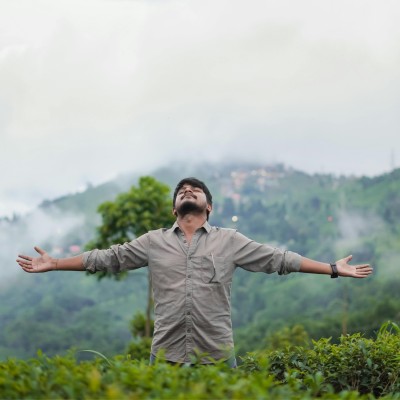
Many of us have discovered something that feels at once obvious and elusive, namely, that being in nature enhances our well-being. We might observe how a forest walk steadies the mind, water settings restore attention, and open landscapes seem to invite a kind of spacious clarity that is difficult to cultivate indoors. These experiences are often described in emotional or poetic terms, yet contemporary research increasingly confirms that our responsiveness to nature is neither accidental nor merely cultural. Rather, it appears to be rooted in the very structure of human perception and cognition. This insight lies at the heart of what has come to be known as the biophilia hypothesis.
The biophilia hypothesis proposes that human beings possess an innate affinity for life and natural environments, an orientation shaped by evolutionary history and expressed in psychological, emotional, and even moral terms. As articulated by social ecologist Stephen Kellert, biophilia refers not only to material dependence on nature but to a much broader spectrum of human needs and satisfactions. These include aesthetic appreciation, emotional balance, intellectual stimulation, and spiritual meaning. When this relationship to nature is diminished, Kellert argues, human life itself becomes impoverished, characterized by stress, dissatisfaction, and a weakened sense of value (Kellert 1993).
What is striking is how naturally this modern scientific framework resonates with the dharma traditions of South Asia. Jainism, Buddhism, and Hinduism all emerged within ecological contexts where forests, rivers, mountains, and animals were not peripheral features of life but constant companions in ethical and spiritual formation. The teachings of dharma consistently emphasize interdependence, restraint, and responsibility across the entire field of living beings. From this perspective, human flourishing is inseparable from the health of the natural world, not merely in a practical sense, but in a deeply moral and spiritual one.
When biophilia is brought into dialogue with dharma traditions, it takes on what might be called a spiritual dimension. The question is no longer only why humans are drawn to nature, but how that attraction shapes character, perception, and ethical orientation. Dharma philosophies suggest that nature is not simply something we enjoy or protect; it is something through which we are formed. Compassion, mindfulness, non-violence, and balance are not abstract ideals but qualities cultivated through sustained engagement with a living, vulnerable world (Bohanec 2026).
Empirical research gives this intuition a firm foundation. One of the most influential scientific discussions of biophilia comes from environmental psychologist Roger Ulrich, whose work examines how humans respond psychologically and physiologically to natural landscapes. Ulrich argues that people exhibit a spontaneous “approach response” to nature, a tendency to find natural environments emotionally rewarding and calming (Ulrich 1993, 86–88). Across a wide range of studies, exposure to natural settings has been shown to reduce stress, lower blood pressure, diminish anxiety and aggression, and promote emotional equilibrium. These effects are not marginal; they are often measurable after only brief encounters with nature.
Ulrich’s research is particularly compelling because it shows that nature’s restorative power extends far beyond leisure or recreation. Patients recovering from surgery heal more quickly when their hospital rooms overlook trees rather than concrete walls. Prisoners with views of farmland or forests report fewer stress-related illnesses than those facing built environments. Even images of natural scenes—murals, photographs, aquariums—can significantly reduce anxiety in high-stress settings such as hospitals, dental clinics, and psychiatric wards (Ulrich 1993, 102–108). Such findings strongly suggest that our responsiveness to nature operates at a deep, pre-reflective level of perception.
Importantly, Ulrich also observes that not all landscapes affect us equally. Environments characterized by open spaces, scattered trees, water features, and visual depth—often described as “savanna-like”—are especially effective in eliciting calm and restoration. Visitors to such environments frequently report feelings of tranquility, clarity, and peacefulness, responses associated with reduced activation of the sympathetic nervous system and increased parasympathetic activity (Ulrich 1993, 108–109). From an evolutionary perspective, these preferences may reflect ancient adaptive patterns. From a dharmic perspective, they underscore why forests, rivers, and mountains appear so persistently in spiritual literature as privileged sites of transformation.
Beyond stress reduction, biophilia research also points to nature’s influence on cognition itself. Exposure to natural environments has been shown to restore directed attention, improve concentration, and enhance certain forms of problem-solving. Ulrich suggests that nature may even support higher-order cognitive functions such as creativity and the ability to form “remote associations”—connections between ideas that are not immediately related but are crucial for insight and innovation (Ulrich 1993, 109–114). Positive emotional states, often induced by natural settings, broaden cognitive flexibility and facilitate the integration of diverse information, whereas prolonged stress narrows attention and constrains creative thought.
These findings carry significant implications when read alongside dharma traditions. In Jain, Buddhist, and Hindu texts, nature is consistently presented as both a mirror and a discipline. On the one hand, natural environments embody virtues to be cultivated: patience, resilience, balance, and equanimity. On the other hand, nature is also dangerous, unpredictable, and demanding, reflecting the untutored and often turbulent state of the human mind. Spiritual growth, according to these traditions, requires learning to remain ethically and attentively grounded amid both external and internal instability.
This motif appears repeatedly in dharma literature. Practitioners are instructed to immerse themselves in nature—sometimes literally, through forest dwelling or pilgrimage, and sometimes meditatively, through contemplation and visualization. By confronting the harshness of nature, one simultaneously confronts one’s own internal afflictions. The logic is subtle but consistent: because the psyche and the natural world are deeply interconnected, mastery over one cannot be achieved without disciplined engagement with the other (Bohanec 2026).
Seen in this light, spiritual biophilia is not a sentimental celebration of nature’s beauty, nor a call for retreat from society. It is a rigorous ethical insight. To cultivate the virtues embodied by nature, one must learn to live attentively within it, respecting both its generosity and its limits. Harm done to the natural world is therefore not merely ecological damage; it is a disruption of the very conditions that support moral clarity, emotional balance, and spiritual insight.
The convergence of biophilia research and dharma philosophy suggests a shared conclusion. Human well-being, ethical responsibility, and spiritual depth are not separable from our relationship with the living world. Modern science provides empirical evidence for what the dharma traditions have long assumed: that nature is formative, not incidental, to human life. If contemporary societies hope to address ecological crisis, psychological distress, and moral fragmentation, they may need to recover not only environmental protections, but a deeper understanding of nature as a partner in human becoming.
In the posts that follow, I will explore how this vision of spiritual biophilia takes distinct shape within Jainism, Buddhism, and Hinduism, before turning to the particularly rich and nuanced articulation found in the writings of Śrīmad Rājcandra.
(To explore this topic in full scholarly detail, see my peer-reviewed article, “Exploring the Connection: Biophilia & Natural Landscape in the Dharma Traditions,” published in The Journal of Dharma Studies (Springer, 2026).)
References
Bohanec, Cogen. 2026. “Exploring the Connection: Biophilia & Natural Landscape in the Dharma Traditions.” Journal of Dharma Studies. Springer.
Kellert, Stephen R. 1993. “The Biological Basis for Human Values of Nature.” In The Biophilia Hypothesis, edited by Stephen R. Kellert and Edward O. Wilson, 20–61. Washington, DC: Island Press.
Ulrich, Roger S. 1993. “Biophilia, Biophobia, and Natural Landscapes.” In The Biophilia Hypothesis, edited by Stephen R. Kellert and Edward O. Wilson, 73–137. Washington, DC: Island Press.