

Back To Blogs
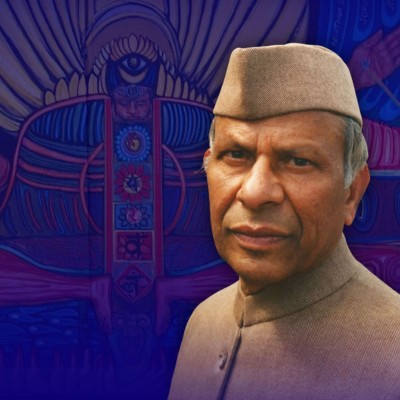
EJS Podcast Ep. 38 An Interview with Dr. Narendra Kumar Jain
The Seven Stages of Enlightenment
08/20/2026
(Original in German, English translation in bold)
In this interview with Christopher Jain Miller (translated into English from the original German interview), Dr. Narendra Kumar Jain recounts his early religious upbringing, his childhood encounters with Mahatma Gandhi from whom he learned yoga, and the making of his celebrated mural “The Seven Stages of Enlightenment” at the East Side Gallery of the Berlin Wall, which he began painting in 1989. Dr. Jain explains why he chose a Jain-inflected yoga theme for a work created at a moment when yoga was officially forbidden in East Germany and reflects on the mural’s enduring message of peace against a backdrop of war and social division.
In diesem Interview mit Christopher Jain Miller berichtet Dr. Narendra Kumar Jain von seiner frühen religiösen Erziehung, seinen Begegnungen mit Mahatma Gandhi in seiner Kindheit, von dem er Yoga lernte, und von der Entstehung seines berühmten Wandgemäldes „Die sieben Stufen der Erleuchtung” an der East Side Gallery der Berliner Mauer, mit dessen Malerei er 1989 begann. Dr. Jain erklärt, warum er sich für ein von der Jain-Religion geprägtes Yoga-Thema entschied – und zwar für ein Werk, das zu einer Zeit entstand, als Yoga in Ostdeutschland offiziell verboten war –, und reflektiert über die zeitlose Friedensbotschaft des Wandgemäldes vor dem Hintergrund von Krieg und gesellschaftlicher Spaltung.
Listen to the full podcast interview in German → Ep. 38 Narendra Kumar Jain | The Seven Stages of Enlightenment
Watch & listen with English subtitles ↓
--- Christopher Jain Miller (CJM) ---
DE: Zu Gast ist heute Dr. Narendra Kumar Jain, ein Künstler und Yogalehrer aus Indien, der seit vielen Jahren in Berlin lebt.
EN: My guest today is Dr. Narendra Kumar Jain, an artist and yoga teacher from India who has lived in Berlin for many years.
DE: Ich hörte zum ersten Mal von Dr. Jain, als ich sein Wandbild „Die sieben Stufen der Erleuchtung” in der East Side Gallery an der Berliner Mauer sah.
EN: I first heard of Dr. Jain when I saw his mural “The Seven Stages of Enlightenment” at the East Side Gallery on the Berlin Wall.
DE: Jai Jinendra und herzlich willkommen Dr. Jain.
EN: Jai Jinendra and a warm welcome Dr. Jain.
--- Narendra Kumar Jain (NKJ) ---
DE: Jai Jinendra. Dev ki Bhagwan aapko khush rakhe.
EN: Jai Jinendra. May God bless you with happiness.
--- CJM ---
DE: Erzählen Sie uns bitte ein wenig über Ihr Leben. Wie sind Sie von Indien nach Berlin gekommen?
EN: Please tell us a little about your life. How did you come from India to Berlin?
--- NKJ ---
DE: Ich bin in einer Jaina-Familie aufgewachsen. Als Zweijähriger habe ich das erste Mantra von meiner Mutter bekommen.
EN: I grew up in a Jain family. At the age of two I received my first mantra from my mother.
DE: Gleichzeitig hat meine Mutter mich immer mitgenommen, wenn sie Jaina-Munis oder andere religiöse Personen besucht hat.
EN: At the same time, my mother always took me along when she visited Jain munis or other religious figures.
DE: Als ersten Muni habe ich Nemi Sagar Ji kennengelernt. Der zweite Muni, den ich kennengelernt habe, war Deshbhushan Ji Maharaj.
EN: The first muni I came to know was Nemi Sagar Ji. The second muni I met was Deshbhushan Ji Maharaj.
DE: Diesen habe ich auch mit meiner Frau zweimal in den 70er Jahren besucht.
EN: I visited him twice with my wife in the 1970s.
DE: Ich bin durch den DAAD im Dezember 1967 nach Berlin gekommen, an die HdK, als Hochschuldozent eingeladen worden.
EN: I was invited through the DAAD in December 1967 to Berlin, to the HdK, as a university lecturer.
DE: Bevor ich nach Berlin kam, habe ich an der Agra-Universität als Professor für Malerei und Kunstgeschichte ab 1963 gearbeitet.
EN: Before I came to Berlin, I worked at Agra University as a professor of painting and art history from 1963.
DE: Dann habe ich zwei Jahre Urlaub genommen.
EN: Then I took leave for two years.
--- CJM ---
DE: Als Sie aufgewachsen sind, haben Sie viel über Kunst und Yoga gelernt.
EN: As you were growing up, you learned a great deal about art and yoga.
DE: Und in einem Zeitungsartikel, den ich online gelesen habe, stand, dass Sie Yoga von Mahatma Gandhi gelernt haben.
EN: And in a newspaper article I read online, it said that you learned yoga from Mahatma Gandhi.
DE: Können Sie uns mehr darüber erzählen, wie es war, Yoga von Gandhi zu lernen, und wo Sie sonst noch Yoga gelernt haben?
EN: Can you tell us more about what it was like to learn yoga from Gandhi, and where else you learned yoga?
--- NKJ ---
DE: Als ich fünf Jahre alt war, hat mein Vater als Freiheitskämpfer öfters an Congress-Sitzungen teilgenommen.
EN: When I was about five years old, my father, as a freedom fighter, often took part in Congress meetings.
DE: Einmal hat mein Vater mich mitgenommen, und ich bin während dieser Sitzung als Kind hin- und hergerannt.
EN: Once my father took me along, and as a child I ran back and forth during the meeting.
DE: Mein Vater fühlte sich nicht wohl, er sagte zu mir: komm und sitz mal hier.
EN: My father felt uncomfortable and said to me: come and sit here.
DE: Dann kam Mahatma Gandhi, mit voller Liebe für mich, und zeigte mir, wie man im Lotussitz sitzt.
EN: Then Mahatma Gandhi came, full of love for me, and showed me how to sit in the lotus position.
DE: Er gab mir einen Malblock um während dieser Sitzung zu malen. Mein Vater meinte, er hätte mich hypnotisiert.
EN: He gave me a drawing pad to paint with during that meeting. My father thought he had hypnotized me.
DE: Ich war unbeweglich und sah ihn an und malte.
EN: I was motionless, looked at him, and painted.
DE: Dies ging so lange, bis die Sitzung zu Ende war und Mahatma Gandhi zu mir kam und sagte: „Braver Junge. Deine Zukunft besteht aus diesen zwei Lehren, d.h. Yoga und Malerei.”
EN: This went on until the meeting came to an end and Mahatma Gandhi came to me and said, “Good boy. Your future consists of these two teachings, i.e. yoga and painting.”
DE: Ab dieser Zeit habe ich mich mit Yoga mehr beschäftigt als mit der Malerei.
EN: From that time on, I devoted myself more to yoga than to painting.
DE: 1948, bei einem Abendgebet in Delhi, hat mein Vater mich mitgenommen, und ich stand hinter meinem Vater.
EN: In 1948, at an evening prayer in Delhi, my father took me along, and I stood behind him.
DE: Mein Vater hat mich nach vorne geholt, und Mahatma Gandhi fragte meinen Vater: Es ist doch derselbe Junge, der damals hin- und hergelaufen war?
EN: My father brought me to the front, and Mahatma Gandhi asked him: Isn't this the same boy who was running back and forth back then?
DE: Heute kann ich mit Stolz sagen, Mahatma Gandhi hatte viele Siddhis und viele zukünftige und klare Visionen.
EN: Today I can say with pride that Mahatma Gandhi had many siddhis and many clear visions of the future.
DE: Nach dem Attentat wurde sein Körper mit der indischen Flagge und mit Rosen und Blumen bedeckt.
EN: After the assassination, his body was covered with the Indian flag and with roses and flowers.
DE: Der Körper wurde auf einen Lastwagen gelegt und zum Darshan in Chandni Chowk gefahren.
EN: The body was placed on a truck and driven for darshan to Chandni Chowk.
DE: Mein Vater bat mich, einen Blumenstrauß zu geben, die Wächter haben jedoch keinen durchgelassen.
EN: My father asked me to offer a bouquet, but the guards let no one through.
DE: Ich habe einen Wächter gebeten und ihn freundlich angesehen, ich war zehneinhalb Jahre alt.
EN: I asked one guard and looked at him kindly; I was ten and a half years old.
DE: Er hat mich an der Hand nach oben gezogen, sodass ich meinen Blumenstrauß auf Gandhi legen konnte.
EN: He pulled me up by the hand so that I could lay my bouquet on Gandhi.
DE: Auf dem Balkon stand meine ganze Familie und hat applaudiert.
EN: My whole family stood on the balcony and applauded.
DE: Das war ein sehr angenehmes Gefühl.
EN: That was a very pleasant feeling.
--- CJM ---
DE: Das kann ich mir vorstellen. Ich kann mir auch vorstellen, dass es einen starken Eindruck hinterlassen hat, als Gandhi Ihnen sagte, dass Kunst und Yoga Teil Ihrer Zukunft sein werden.
EN: I can imagine that. I can also imagine it left a strong impression when Gandhi told you that art and yoga would be part of your future.
DE: Und hier sprechen wir nun über Ihr Wandbild, das beides an der Berliner Mauer vereint.
EN: And here we are now, talking about your mural, which unites both on the Berlin Wall.
DE: Und Yoga ist tatsächlich das Thema Ihres berühmten Wandbilds an der East Side Gallery der Berliner Mauer.
EN: And yoga is indeed the theme of your famous mural at the East Side Gallery of the Berlin Wall.
DE: Warum haben Sie sich für Yoga als Thema entschieden? Und bitte erzählen Sie uns mehr über Ihre Erfahrungen beim Malen dieses Wandbilds.
EN: Why did you choose yoga as the theme? And please tell us more about your experiences painting this mural.
DE: Sie haben bereits vor dem Fall der Berliner Mauer mit der Arbeit daran begonnen.
EN: You had already begun working on it before the fall of the Berlin Wall.
DE: Bitte berichten Sie unseren Zuhörern, wie es möglich war, vor dem Fall der Mauer nach Ostberlin zu gelangen.
EN: Please tell our listeners how it was possible to get into East Berlin before the Wall came down.
--- NKJ ---
DE: Bevor die DDR mit Westdeutschland vereint wurde, ca. 1987, stand ich im Flughafen Schönefeld in meinem Nehru-Anzug.
EN: Before the GDR was united with West Germany, around 1987, I was standing at Schönefeld Airport in my Nehru suit.
DE: Da kam jemand auf mich zu und fragte, ob ich der indische Kulturminister sei.
EN: Someone came up to me and asked whether I was the Indian Minister of Culture.
DE: Dann habe ich ihn gefragt, warum; dann sagte er, sein Chef wollte dies gern wissen.
EN: Then I asked him why; then he said his boss would like to know.
DE: Ich habe gesagt: Ich bin kein Kulturminister, sondern Kulturbotschafter.
EN: I said: I am not a Minister of Culture, but a cultural ambassador.
DE: Da hat er mich zu seinem Chef mitgenommen, welcher mit ca. 20 Personen dort stand.
EN: So he took me along to his boss, who was standing there with about 20 people.
DE: Dieser Chef wurde mir als Kulturbotschafter vorgestellt. Ich fragte ihn, was für eine Art Chef er ist.
EN: This boss was introduced to me as a cultural ambassador. I asked him what kind of boss he was.
DE: Dieser sagte, er sei der Mauerchef Honecker.
EN: He said he was the “boss of the wall,” Honecker.
DE: Ich hatte keine Ahnung von Honecker oder Politik.
EN: I had no idea about Honecker or politics.
DE: Ich habe gesagt: Chef, lassen Sie doch die Mauer von mir malen.
EN: I said: Boss, do let me paint the Wall.
DE: Ich gab meine Adresse und Karte, und nach zwei Jahren bin ich in die DDR eingeladen worden.
EN: I gave my address and card, and after almost two years I was invited to the GDR.
DE: Im März 1989 habe ich angefangen, das Bild zu malen.
EN: In March 1989 I began to paint the mural.
DE: Ich habe bewusst dieses Yoga-Thema gewählt, weil Yoga im Ostblock verboten war.
EN: I deliberately chose this yoga theme, because yoga was forbidden in the Eastern Bloc.
DE: Ich habe das Mahavira-Bild gemalt, aber ich habe es „Die sieben Stufen der Erleuchtung” (die sieben Chakras) genannt.
EN: I painted the Mahavira image, but I called it “The Seven Stages of Enlightenment” (the 7 Chakras).
DE: Warum? Weil man im Hinduismus diese ersten drei Stufen (drei Chakras) beherrschen muss.
EN: Why? Because in Hinduism one must master these first three steps (the first 3 chakras).
DE: Im Jainismus haben die Digambara-Jaina-Munis die ersten drei Stufen (die ersten drei Chakras) schon im früheren Leben beherrscht.
EN: In Jainism, the Digambara Jain munis have already mastered the first three steps (first 3 chakras) in a former life.
DE: Deswegen ist es ein Jaina-Bild mit den weiteren vier Stufen (die vier anderen Chakras).
EN: That's why it's a Jain picture with the other four levels (the four other chakras).
DE: Hintergrund ist mein Jaina-Sein. Weitere Gründe sind die 24 Tirthankara und ihre Namen gewesen.
EN: The background is my being a Jain. Further reasons were the 24 Tirthankaras and their names.
--- CJM ---
DE: Zuerst haben Sie Gandhi kennengelernt. Und als Sie dann nach Deutschland kamen, haben Sie Erich Honecker kennengelernt.
EN: First you came to know Gandhi. And then, when you came to Germany, you came to know Erich Honecker.
DE: Ich finde es beeindruckend, dass Sie den Mut hatten, eine Botschaft der Gewaltlosigkeit zu malen, und interessant, dass Honecker Sie dazu eingeladen hat.
EN: I find it impressive that you had the courage to paint a message of nonviolence, and interesting that Honecker invited you to do so.
DE: Und es scheint, als sei die Botschaft, die Ihr Wandbild vermittelt, heute wichtiger denn je.
EN: And it seems that the message your mural conveys is more important today than ever.
DE: Überall auf der Welt brechen Kriege aus, es herrscht soziale Spaltung, und fast überall ist Gewalt zu beobachten.
EN: All over the world wars are breaking out, there is social division, and violence can be seen almost everywhere.
DE: Gibt es vor diesem Hintergrund eine abschließende Botschaft, die Sie unseren Lesern mitgeben möchten?
EN: Against this background, is there a closing message you would like to give our readers?
--- NKJ ---
DE: Ja. Ich wollte nur sagen… diese Frage ist berechtigt. Krieg führen die Leute, weil sie sich selber nicht gut kennen.
EN: Yes. I just want to say… this question is justified. People wage war because they do not know themselves well.
DE: Ich habe dazu auch das Bild „Berliner Melodie”, 700 m² in der Glückstraße 23, Berlin-Tiergarten, über Mahavira gemalt, im Jahr 1978.
EN: On this theme I also painted the work “Berliner Melodie,” 700 m² at Glückstraße 23, Berlin-Tiergarten, about Mahavira, in 1978.
DE: Dieses Bild braucht dringend Unterstützung… um wieder gemalt zu werden.
EN: This work urgently needs support... to be painted again.
DE: Und ich habe für ca. 50.000 DM damals die Mauer gemalt. Und heute braucht dieses Bild 50.000 € (um es zu restaurieren).
EN: And I painted the Wall for about 50,000 DM at that time. And today this painting needs 50,000 € (to restore it).
DE: Ich habe dazu auch 1974 einen „Weltbaum” gemalt.
EN: I also painted a “World Tree” in 1974.
--- CJM ---
DE: Wir werden Ihre Nachricht zu Ihrem anderen Wandbild, „Berliner Melodie”, weitergeben.
EN: We will pass on your message about your other mural, “Berliner Melodie.”
DE: Und wir hoffen, dass einer unserer Leser dazu inspiriert wird, Ihnen bei der Restaurierung dieses bedeutenden Werks zu helfen.
EN: And we hope that one of our readers will be inspired to help you restore this important work.
DE: Für alle, die mehr darüber erfahren möchten: Ich habe in unserem neu überarbeiteten Buch Engaged Jainism ein Kapitel über Dr. Narendra Kumar Jains Kunst und sein Wandbild „Die sieben Stufen der Erleuchtung” verfasst.
EN: For all who would like to learn more: in our newly revised book Engaged Jainism, I have written a chapter on Dr. Narendra Kumar Jain's art and his mural “The Seven Stages of Enlightenment.”
--- NKJ ---
DE: Ich finde es unheimlich schön, dass junge Leute wie Sie diese Aufgabe Gott anvertraut haben und ich wünsche Ihnen viel Glück im Leben.
EN: I think it's truly wonderful that young people like you have entrusted this task to God, and I wish you all the best in life.
DE: Wenn Sie nach Berlin kommen, dann sind Sie für Saathvik-Jain-Essen bei mir eingeladen.
EN: If you come to Berlin, you're invited to my place for a Saathvik Jain meal.
DE: Ich wünsche Ihnen alles Glück und viel Freude im Jainismus.
EN: I wish you all the best and much joy in Jainism.
--- CJM ---
DE: Vielen Dank für die Einladung. Saathvik-Jain-Essen klingt sehr lecker.
EN: Thank you very much for the invitation. Saathvik Jain food sounds very delicious.
DE: Dr. Jain, ich möchte Ihnen auch dafür danken, dass Sie sich die Zeit für dieses Interview genommen haben.
EN: Dr. Jain, I would also like to thank you for taking the time for this interview.
DE: Wir haben viel von Ihnen gelernt und werden dieses Interview an alle weitergeben, die wir kennen.
EN: We have learned a great deal from you and will share this interview with everyone we know.
DE: Ich freue mich darauf, wieder mit Ihnen zu sprechen. Jai Jinendra, Namaste und auf Wiedersehen.
EN: I look forward to speaking with you again. Jai Jinendra, Namaste, and goodbye.
--- NKJ ---
DE: Ja. Danke schön. Tschüss.
EN: Yes. Thank you. Goodbye.
Inspired by this conversation? Continue exploring Dr. Narendra Kumar Jain's art and its place within contemporary expressions of Jain thought in Engaged Jainism: Critical and Constructive Studies of Jain Social Engagement. In the newly released volume, Professor Miller contributes a chapter examining Dr. Jain's artistic work and The Seven Stages of Enlightenment, situating the Berlin Wall mural within broader conversations about Jainism, yoga, nonviolence, and social engagement.