✔️ Added course to cart

View Cart
Partnering for a Compassionate and Sustainable Society
Join Arihanta Institute and JAINA Ahimsa Eco-Vegan Committee in advancing a shared commitment: promoting compassion and sustainability as expressions of Jain ethical principles. Together, we're offering courses that advance the principles JAEVC champions within and beyond the Jain community.
About the Collaboration
Arihanta Institute is a 501(c)(3) nonprofit offering high-quality education rooted in Jain principles of non-violence (ahiṃsā) and compassion (karuṇā). We are honored to collaborate with the JAINA Ahimsa Eco-Vegan Committee (JAEVC), a sub-committee of the Federation of Jain Associations in North America (JAINA), and offer courses in support of their mission: advancing compassionate, plant-based, and sustainable living.
 
How Your Enrollment Supports JAEVC
When you create a new Arihanta Institute account through this page, a portion of every purchase you make on arihantainstitute.org will directly support the JAINA Ahimsa Eco-Vegan Committee's mission. If you already have an account, purchases made by navigating from this page will also count toward supporting their work. See our Terms of Use for specifics and exclusions.
Membership 14-day trial image

14-DAY FREE TRIAL

Subscribe to Arihanta Institute’s Course Membership for unlimited access to our growing library of live and self-paced courses.

Start Your Free Trial

Suggested Courses

Self-paced
Self-paced
Self-paced
Self-paced

1014 | Jainism, Veganism, and Engaged Religion

$25.00 USD
Learn More
Added to cart

1014 | Jainism, Veganism, and Engaged Religion

Committed to nonviolence (ahiṃsā) since its ancient beginnings, the Jain tradition has admonished the mistreatment, slaughter, sacrifice, and consumption of animals for thousands of years. In light of these commitments, Jains have traditionally lived a lacto-vegetarian lifestyle, advocated for the legal protection of animals, and have created sanctuaries for animals for centuries. In ancient and medieval scriptural sources, we even find restrictions on the consumption of dairy itself, suggesting potential pre-modern Jain commitments to what would now be referred to as a vegan lifestyle. And today, many Jains have been advocating for veganism in light of the devastating and irreparable harms involved in the production of dairy in contemporary society.  This course carefully considers the philosophical and historical underpinnings of Jain Veganism, presenting an opportunity for non-Jain vegans to discover a rich philosophical system aligned with their values, as well as an opportunity for Jains to appreciate the philosophical resources within their own tradition which naturally lead to living an ethical vegan lifestyle.  Course Details6 hours of recorded lecture contentAdditional readings for self-studyPlus+ 4 x 60-minute recorded Q&A sessions with Professors Dickstein and Miller Student Reviews"Arihanta Institute's course, Jainism, Veganism, and Engaged Religion, is a remarkable example of the transformative power of aligning nonviolence, or ahimsa, with daily living. Professors Miller and Dickstein expertly highlight the Jain tradition, sparking essential conversations about animal agriculture, spiritual practice, and ethically navigating climate collapse. If you're seeking a compassionate path forward, I highly recommend this course. Every week brought a welcoming dialogue with our cohort of students and additional insights from our professors. Thank you, Arihanta Institute!"— Diana H., United States, 2024 “This course exceeded my already-high expectations. Thank you all from the bottom of my heart.”— Agni H., United States, 2024 "I have enjoyed this class, the readings and videos, our discussions, and the meetings with all of you. Thank you all and thank you for this offering Christopher and Jonathan." — Mike A., United States, 2024
$25.00 USD

Instructors

Self-paced
Self-paced
Self-paced
Self-paced

5001 | Samyag-darśana

$99.00 USD
Learn More
Added to cart

5001 | Samyag-darśana

सम्यग्दर्शन: जैन दर्शन की मूलभूत अवधारणा का दार्शनिक विश्लेषण जैन दर्शन भारतीय दार्शनिक परंपरा का एक अत्यंत सूक्ष्म, तत्त्वनिष्ठ एवं आत्मसाक्षात्कारोन्मुखी दृष्टिकोण है, जिसकी मौलिकता आत्मा के स्वाभाविक शुद्ध स्वरूप की पुनःप्राप्ति में निहित है। इसके अनुसार, जीव के बंधन का मूल कारण अविद्या, राग, द्वेष, और मिथ्यात्व है। इन बंधनों से मुक्ति प्राप्त करना ही मोक्ष है, जो जैन मत में जीवन का चरम और परम लक्ष्य है।मोक्ष की सिद्धि सम्यग्दर्शन, सम्यग्ज्ञान, और सम्यक् चारित्र — इन त्रिविध साधनाओं से होती है, जिन्हें सामूहिक रूप से "रत्नत्रयी" कहा गया है। इनमें सम्यग्दर्शन को प्रवेशद्वार का स्थान प्राप्त है। इसका तात्पर्य आत्मा की प्रकृति, तत्त्वों की वास्तविकता, और जीवन के लक्ष्य के प्रति श्रद्धायुक्त स्पष्ट दृष्टि से है। उपयोगिताछात्र सम्यग्दर्शन के शास्त्रीय, व्यावहारिक, और आध्यात्मिकपक्षों को स्पष्ट रूप से समझ पाएंगे।वे मिथ्यात्व के लक्षणों को पहचानकर आत्म-निरीक्षण कर सकेंगे।सम्यग्दर्शन की प्राप्ति की प्रक्रिया को समझकर अपने साधना पथ को सुस्पष्ट बना सकेंगे।सम्यग्दर्शन के आधार पर मोक्षमार्ग का सारगर्भित चिंतन कर सकेंगे।  Samyag-darśana: A philosophical analysis of the foundational concept in Jain philosophy Jain philosophy is a profoundly subtle, truth-centered, and self-realization-oriented perspective among the Indian philosophical traditions. Its fundamental conviction is in the re-attainment of the soul’s intrinsic pure nature. According to Jain thought, the root causes of the soul’s bondage are avidyā (ignorance), rāga (attachment), dveṣa  (aversion), and mithyātva (deluded perception), and elimination of these bondages leads to mokṣa itself, which is regarded as the greatest and ultimate goal of human life in Jainism. The attainment of mokṣa is made possible through the triad of samyag-darśana (right perception), samyag-jñāna  (right knowledge), and samyag-cāritra (right conduct), collectively known as the ratnatraya (Three Jewels). Among these, samyag-darśana is accorded the status of the initiator. Its attainment implies a reverence-filled unblemished perception of the nature of the soul, unwavering belief in the tattvas (fundamental principles), and the true purpose of life. Learning Objectives:• Understand the importance of samyag-darśana in the spiritual journey.• Identify forms of mithyatva (false beliefs) and their classifications.• Define samyag-darśana and explore its various types.• Learn about the sequence of attaining samyag-darśana and the concept of granthibheda (breaking of knots of delusion).• Explore the aṅgas (eight limbs) of samyag-darśana.• Analyze the dūṣaṇa (offenses) and bhūṣaṇa (ornaments) of samyag-darśana.• Recognize samyag-darśana as the foundational step in the path of self-realization.• Understand the relationship between samyag-darśana and svānubhūti (direct self-experience).
Calendar iconThis course meets live on Zoom, weekly on Saturdays (Aug 30 - Nov 29 at 8 AM PT | 4 PM UK | 8:30 PM IST).
$99.00 USD

Instructor

Self-paced

111 | Animal-Centered Design

$99.00 USD
Learn More
Added to cart

111 | Animal-Centered Design

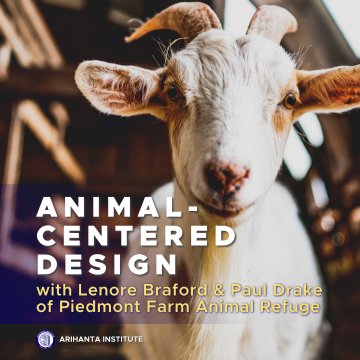
Non-human animals are routinely used for profit or product, and as a result, suffer greatly in our society. Animal sanctuaries provide a glimpse of a different world; one in which animals are provided with protected spaces and treated as equals. A new initiative is taking shape that can aid sanctuaries, and individuals, in their goal of bettering animals' lives: Animal-Centered Design (ACD). In this course you will learn the basic principles of ACD, study examples of it in action within sanctuary settings, and consider how ACD can be applied to companion animals and beyond. This course will also touch on passive solar design, focusing on how proper orientation to the natural elements can benefit both animals and our environment. Readings and assignments are provided throughout the course to engage you directly in the animal sanctuary design process and to inspire you to make a positive change for animals.A portion of the proceeds for this course support Piedmont Farm Animal Refuge.Learning Objectives: Class 1: Introduction to Farmed Animal SanctuariesClass 2: Principles of Animal-Centered DesignClass 3: Precedents in Animal-Centered DesignClass 4: Case Study I-Designing Spaces for GoatsClass 5: Case Study II-Designing Spaces for DucksClass 6: Animal-Centered Design for Companion AnimalsClass 7: Passive Solar Design Strategies for Animal Spaces
Calendar icon6 hours Self-Study (Instructors available by appointment in office hours)
$99.00 USD

Instructors

Self-paced
Self-paced
Self-paced
Self-paced
Self-paced
Self-paced
Self-paced

1022 | Animal Law in the United States

$25.00 USD
Learn More
Added to cart

1022 | Animal Law in the United States

In the United States, the law has long treated animals as property and objects to be owned, used, and discarded within human-centered systems. While legal protections against animal cruelty exist, they are often fragmented, riddled with exemptions, and inconsistently enforced. The result is a legal framework that permits immense suffering, particularly for animals used in industrial agriculture, research, and entertainment, while extending comparatively greater protections to companion animals or endangered species.  Over the past several decades, the field of animal law has emerged to interrogate this system, asking not only how animals are treated under the law, but why...and what must change. Animal law challenges the assumption that legal systems are neutral, revealing how they reflect and reinforce hierarchies that privilege human interests, corporate power, and economic efficiency over animal life and well-being. In this course, we will examine key legal frameworks in the U.S. governing the treatment of animals and explore how the law functions both as a tool of oppression and a site for advocacy. Each class focuses on a major theme in contemporary animal law: the foundational classification of animals as property; the regulation (and deregulation) of their use in various industries; the legal distinctions between species and contexts; and the growing efforts to transform legal systems through strategic litigation, rights-based arguments, and cross-movement coalition building. Through this lens, students will be invited to think critically about the role of law in shaping societal values and the possibilities for building a more just, multispecies future. Course Details4 hours of recorded lecture contentAdditional readings for self-studyPlus+ 4 x 60-minute live Q&A Zoom sessions (previously recorded) with Professor Nirva Patel
$25.00 USD

Instructor

Self-paced

1024 | Animal Law in Global Perspective

$25.00 USD
Learn More
Added to cart

1024 | Animal Law in Global Perspective

Legal systems around the world facilitate the exploitation of animals. The results are devastating not only to the animals involved but to people and planetary ecosystems. How can we transform legal systems to reverse this devastation and instead facilitate animal well-being, flourishing, and rights? In this course, Professor Deckha introduces the ideas animal law scholars have advanced to dramatically re-shape legal systems, including her own proposal, advanced in her book Animals as Legal Beings: Contesting Anthropocentric Legal Systems. The course considers the strengths of each proposal as well as their limits. The course uses an intersectional analytic that draws from the feminist animal care tradition, as well as feminist theories of embodiment and relationality, postcolonial theory, and critical animal studies, to compare and contrast proposals inviting learners to consider how the law can move forward for animals in an impactful and non-reductive way despite its anthropocentric foundations. At the end of the course, learners will have a solid understanding of why the law does not protect animals even though it claims to, how this failure is connected to human rights struggles, what legal momentum is currently building for animals around the world, and various contemporary leading proposals as to how to continue to build momentum and transform the law.
$25.00 USD

Instructor

Live Online

1025 | Reading "Animals and Capital" with Dinesh Wadiwel

$25.00 USD
Learn More
Added to cart

1025 | Reading "Animals and Capital" with Dinesh Wadiwel

Over the last century there has been an exponential increase in the number of land and marine animals utilized for human food supplies, with growing per capita human consumption of meat and dairy products. This expansion has reshaped the diets of most humans on the planet, and condemned trillions of animals to the horrors of intensive farming and industrial fisheries. To an extent, what happened to animals over the last hundred years mirrors that of other commodities under capitalism such as televisions, cars, fashion, computers and water bottles: they have been overproduced as a means of making profit. Arguably this approach to economies now poses an existential threat to our planetary systems, as the endless drive to produce wealth takes its toll on the ability of the earth to reproduce and sustain life. In this course, Dinesh Wadiwel walks through his 2023 book Animals and Capital. As Wadiwel will discuss, while our treatment of animals is certainly a moral catastrophe, it is also a structural problem, interconnected with our economic system. Each class in this course is designed to work through the key arguments of the book —understanding how to situate the treatment of animals and the emergence of the factory farm system, how a political economic approach to understanding markets is useful for understanding animals as both commodities and labor, and finally, how we might imagine transforming our economy and society to enable multispecies flourishing.
Calendar icon
Course materials available on Monday, August 3, 2026
+ 4 Live Q&A zoom sessions on Wednesdays at 4 p.m. PDT on Aug. 5, 12, 19, 26, 2026 | Thursdays at 9 a.m. AEST on Aug. 6, 13, 20 & 27, 2026.
$25.00 USD

Instructor

Self-paced

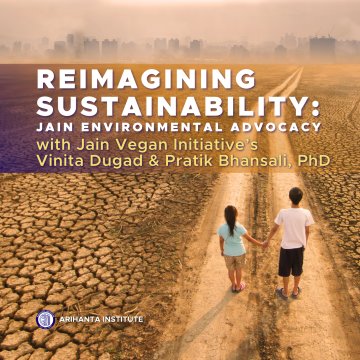
106 | Reimagining Sustainability: Jain Environmental Advocacy

The Jain Vegan Initiative brings this course designed to introduce the connection between Jain Philosophy and Environmentalism. It introduces a unique lens for looking at the environment by understanding how various communities are affected differently, and how measurements of environmental impact that take into global average impacts dilute a sense of urgency. The stress-free transition from being part of the problem to being a part of the solution in a busy and rapidly urbanizing life will be discussed. The course will entail action oriented self-assessment and discussion regarding effective ways of spreading environmental awareness.  Learning Objectives:Looking at the environment and environmental action from the Jain lens.Learning about how using global averages to assess environmental impact dilutes the sense of urgency and the disproportionate impact on different communities.Understanding how ignoring the effects of day to day individual choices may imply participation in propagating injustice.Learning how our individual actions are tied to systemic problems of capitalism and consumerism.Obtaining a practical, stress-free, and planned approach to lifestyle transition in a busy, rapidly urbanizing life, and some ways of creating increased environmental awareness
Calendar icon6 hours Self-Study (Instructors available by appointment in office hours)
$99.00 USD

Instructors

Self-paced

1015 | Debunking the Myth of Sustainable and Humane Animal Agriculture

$25.00 USD
Learn More
Added to cart
Self-paced

112 | Ahimsa to End Gun Violence

$99.00 USD
Learn More
Added to cart

112 | Ahimsa to End Gun Violence

This course is designed to inculcate an awareness and appreciation for the overarching philosophy of Ahimsa emanating from the perspectives of the four dharma traditions that started in India: Jainism, Hinduism, Buddhism, and Sikhism. Next, this course covers ahimsa and peaceful movements around the world that resulted in meaningful, lasting changes. Thereafter, it takes the students into the 200+ history and evolution of gun violence in America and how it has become an epidemic in the 20th century. We have seen time and again that each act of violence is succeeded by prayers, candles, flowers, widespread media coverage, and a resolution to act, though nothing is ever really accomplished by lawmakers. We develop ideas about how Ahimsa and Peaceful Activism can curb this seemingly unstoppable violence, so that mass shootings and gun violence do not become normalized in our society. Learning Objectives:1. To impart essential literacy about Ahimsa to demonstrate how it is much broader and deeper than the term nonviolence.2. To discuss how the philosophy of Ahimsa has been utilized by Mahavir, Mahatma, and MLK to bring societal transformations.3. To comprehend the enormity of challenges facing primarily America due to the epidemic of gun violence.4. To understand how the Second Amendment has been exploited by the NRA, politicians, and gun lobbies in America, with utter disregard for human lives.5. To discuss how diverse tenets of Ahimsa can be utilized to save human lives through activism in the short (1-2 years), intermediate (3-5 years), and long (6-10 years) terms.6. To learn how you can contribute to curbing gun violence by supporting groups likeEverytown for Gun Safety, Mothers Demand Action, Students Demand Action, Brady’sCampaign, and Ahimsa-End Gun Violence.
Calendar icon
Course materials available beginning March 2, 2026, + 4 hours live Q&A Zoom sessions on Saturdays, March 7, March 14, March 21, and March 28 from 9:00 - 10:00 a.m. PT.
$99.00 USD

Instructor

Self-paced

1007 | Peacebuilding & Interfaith Dialogue in the Jain Tradition

$99.00 USD
Learn More
Added to cart

1007 | Peacebuilding & Interfaith Dialogue in the Jain Tradition

In this course we will explore how we can talk with others from different religious (or non-religious) traditions in a way that fosters friendship and mutual respect. We will discuss the Jain tradition’s many resources that further the goals of peacebuilding in a pluralistic society, and what it means to create social unity despite the diversity of perspectives in various belief systems. Given the history of interfaith conflict and violence in our world, the Jain tradition has much to offer in terms of how understanding the religious (or non-religious) “other” and how dialoguing with those who have fundamentally different beliefs can be a source of friendship, harmony, and strength, rather than conflict and disunity as it so often is.We will also discuss how such interfaith dialogue can be understood not only in social terms, but in the Jain philosophical terms of anekānta-vāda, ahiṃsā, etc. such that interfaith interactions can be a means of our own personal spiritual development—as well as social unity at a time when people seem more polarized than ever. We will also give particular emphasis to how the Jain tradition has employed a shared framework of yoga to dialogue with other dharma traditions, and what this tells us today about the potential for interfaith, intercommunal peacebuilding from the perspective of the Jain tradition.
Calendar icon10 Hours
$99.00 USD

Instructor

Self-paced

2014 | Jain Teachings & Practices of Compassion

$99.00 USD
Learn More
Added to cart

2014 | Jain Teachings & Practices of Compassion

The Jain tradition is rightly famous for its teachings and practices of ahiṃsā, or nonviolence in thought, word, and action. Less well-known or well-understood is the Jain emphasis on karuṇā or dāyā—compassion. Even admirers of the Jain emphasis on nonviolence might ask whether the Jain ideal is merely one of avoiding harm or if there is a place for doing positive good for the welfare of other beings in this tradition. Given the strong emphasis in this tradition of not harming animals and practicing a vegetarian or vegan diet, some might also ask whether the practice of compassion specifically toward human beings is also important to Jains. The answer to both these questions is an emphatic yes. There is indeed a strong Jain emphasis on living compassionately, and specifically on treating our fellow humans with kindness. This course will explore Jain teachings and practices of compassion–including, but not limited to, compassion directed toward our fellow human beings. All suggested course readings are provided as links and pdfs throughout the course. Learning Objectives:Understand the foundations of compassionate living according to Jain teachings.Learn how the Jain tradition provides rich philosophical resources that encourage us to live compassionately.Learn how teachings and practices of compassion are lived out in the Jain community.
Calendar iconAvailable for self-study starting Feb 3, 2025.
$99.00 USD

Instructor

Self-paced
Self-paced
Self-paced

2018 | Human Security as Compassion: Jain Perspectives on Global Challenges

$99.00 USD
Learn More
Added to cart

2018 | Human Security as Compassion: Jain Perspectives on Global Challenges

Feeling safe is one of our biggest needs. But sometimes it seems like we live in an age of uncertainty and increasingly complex global crises. What then does it take today for human beings to feel and be safe?In this course you will learn how Jain thought and practice can speak to each of the seven areas of human security: 1) Personal Security, 2) Health Security, 3) Food Security, 4) Environmental Security, 5) Economic Security, 6) Political Security, 7) Community Security. Human security is not merely a matter of technology and logistics and a task for states and big organizations. It can also be approached as value-based: helping others to feel and be safe as an act of compassion. Underlying the concept of human security is the desire to understand what each individual human being needs to be able to flourish and live a meaningful life. In the course we will discuss different ways of answering this question, from the United Nations sustainable development goals to the wisdom of the Jain scriptures, and how they can inform each other to address today’s global challenges. Learning Objectives:•  Understand concepts connected to human security.•  Learn about compassionate Jain approaches to today’s global security challenges in both theory and practice.•  Develop the way you think about security, both your own and that of others.•  Get inspired for compassionate action that makes a difference in people’s lives.
Calendar iconAvailable for self-study starting June 2, 2025.
$99.00 USD

Instructor

Self-paced
Self-paced

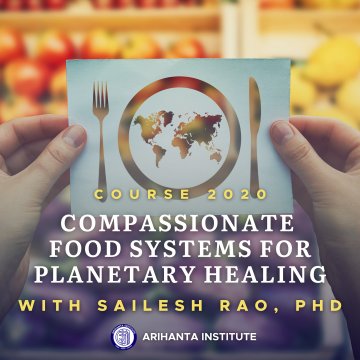
2020 | Compassionate Food Systems for Planetary Healing

$99.00 USD
Learn More
Added to cart

2020 | Compassionate Food Systems for Planetary Healing

The global food system is the single largest contributor to the ongoing ecological crisis and humanitarian crisis, impacting every one of the six planetary boundary transgressions that the Stockholm Resilience Center identified in 2023. This necessitates a transformation to a compassionate food system that meets the nutritional needs of all human beings while ensuring that these planetary boundary transgressions are mitigated. In this class, we will examine the architectures of compassionate food systems and how they can be implemented as the foundation of a holistic transformation from the climate heating phase to the climate healing phase of our civilization.Learning ObjectivesUnderstand the Urgency: Articulate the critical need for transforming foodsystems to address ecological crises and social injustices, including theimplications of animal agriculture on planetary boundaries and human health.Define Compassionate Food Systems: Explain the principles of a compassionate food system and its potential to provide nourishing food for all while operating within the limits of planetary boundaries.Analyze Implementation Strategies: Assess the political and economic transformations required to implement compassionate food systems effectively.Facilitate Transformation: Identify grassroots initiatives and strategies to overcome resistance and facilitate the transition to a compassionate food system.
Calendar iconAvailable for self-study on Monday, August 4, 2025.
$99.00 USD

Instructor

Discover All Arihanta Institute Courses

JAINA Ahimsa Eco-Vegan Committee Mission

The JAINA Ahimsa Eco-Vegan Committee (JAEVC) advocates for the universal embrace of the Jain principle of non-violence (ahiṃsā), leading to a compassionate and sustainable society that respects and honors the sanctity of all life forms and the environment. JAEVC promotes awareness and adoption of veganism and environmental sustainability as expressions of Jain ethical principles, fostering compassionate action within and beyond the Jain community.
Arihanta Institute Logo

Arihanta Institute Mission

As an academic institution, Arihanta Institute is dedicated to advancing education, scholarship, critical research, and public dissemination of real-world application of the Jain principles of non-violence (ahiṃsā) and compassion (karuṇā). Our mission is to empower individuals with knowledge to embrace and apply these principles as a force for positive change, addressing the most pressing issues of our time with courage and compassion.
Terms & Conditions
JAINA Ahimsa Eco-Vegan Committee Collaboration Terms and Conditions
Effective Date: April 1, 2026
 
These Collaboration Terms ("Collaboration Terms") apply when you access Arihanta Institute offerings through the JAINA Ahimsa Eco-Vegan Committee's co-branded landing page, links, or discount codes (the "Collaboration Program"). They supplement Arihanta Institute's Terms of Use, Payments and Refund Policy, and other referenced policies, all of which continue to apply.
 
1. Overview of the Collaboration
Arihanta Institute, a 501(c)(3) nonprofit educational organization, and the JAINA Ahimsa Eco-Vegan Committee (JAEVC), a sub-committee of the Federation of Jain Associations in North America (JAINA), a 501(c)(3) nonprofit organization, have entered into a Collaboration to promote mission-aligned educational offerings that advance veganism, environmental sustainability, and compassionate action rooted in Jain ethical principles. When you make eligible purchases through this Collaboration using a valid JAEVC code at checkout, you may receive a JAEVC discount, and a portion of the proceeds from your purchase will be directed by Arihanta Institute to JAEVC.
 
2. Eligible Purchases
Qualifying Purchases
The following offerings qualify for JAEVC discounts and proceeds sharing when purchased on arihantainstitute.org with a JAEVC code applied at checkout:
  • All individual courses, excluding Non-Qualifying Purchases listed below
  • Course bundles (multiple self-paced courses purchased together)
  • The Arihanta Institute Course Membership Program (eligible for proceeds sharing only — see below)
Non-Qualifying Purchases
The following are not eligible for the JAEVC discount or proceeds sharing:
  • Graduate Seminars or degree-bearing programs offered through Claremont School of Theology
  • Courses hosted on third-party platforms not operated by Arihanta Institute
  • Free trials, fully discounted, or $0 transactions
Discount Terms
Qualifying course purchases (as defined above) receive a 10% discount when the JAEVC code is applied at checkout. Course Memberships qualify for proceeds sharing with JAEVC but do not receive a discount.

3. Discounts and Proceeds
Arihanta Institute will donate a portion of each eligible transaction to JAEVC based on net revenue, defined as the user's purchase amount (after discounts) minus standard payment-processing fees (typically 2.9% + $0.30 per transaction). When a valid JAEVC code is applied at checkout, proceeds will be directed as follows:
  • 50% of net revenue from individual courses (excluding synchronous language courses)
  • 20% of net revenue from synchronous language courses and course bundles
  • $25 per new paid Course Membership enrollment following a successful first payment
Discounts and proceeds sharing are dependent on the current Collaboration Agreement between Arihanta Institute and JAEVC and may change at any time without prior notice.
 
4. New Users
If you are new to Arihanta Institute, your account will be associated with JAEVC when you:
  • Create your account through the JAINA Ahimsa Eco-Vegan Committee's co-branded landing page or link; or
  • Apply a JAEVC code at checkout during your first purchase.
Your account association ensures that the JAEVC code auto-populates during checkout for future purchases. However, you retain the option to manually replace or remove the code. If you remove or replace the code with one not associated with JAEVC, the JAINA Ahimsa Eco-Vegan Committee will not receive proceeds or credit for that purchase.
 
5. Existing Users
If you already have an Arihanta Institute account, you can support this Collaboration by:
  • Starting from the JAEVC landing page or link (where the code will automatically apply at checkout); or
  • Entering a JAEVC code manually at checkout.
Only purchases completed with an active JAEVC code at checkout will receive the JAEVC discount and generate proceeds to the JAINA Ahimsa Eco-Vegan Committee. If you complete a transaction without the code—or by using a different organization's code—no portion of your purchase will be shared with JAEVC.
 
6. Limitations and Exceptions
Discounts and revenue sharing are governed by the current Collaboration Agreement between Arihanta Institute and JAEVC and may be modified at any time. If the Collaboration ends, your Arihanta Institute account will remain active, but future purchases will no longer generate contributions or discounts related to JAEVC. If a refund is issued, that transaction is ineligible for revenue sharing with JAEVC. Arihanta Institute reserves the right to modify or discontinue codes, discounts, or eligibility criteria without notice.
 
7. No Agency Relationship
This Collaboration does not create any agency, partnership, or joint venture between Arihanta Institute and the JAINA Ahimsa Eco-Vegan Committee. You purchase directly from Arihanta Institute. All donations and proceeds allocations are administered solely by Arihanta Institute under the terms of the Collaboration Agreement.
 
8. Other Applicable Policies
Your use of Arihanta Institute's site and services remains governed by our Terms of Use, Payments and Refund Policy, and Honor Code. Please review these at https://arihantainstitute.org/about/terms.

Enrollment Options

ENROLLMENT TUITION

  • $99 one time payment
  • Lifetime access to course
    #### | Name.
Enroll

14-DAY FREE TRIAL

  • Free, unlimited access to our self-paced courses for 14-days.
  • Already used your free trial? Enroll in our Monthly or Annual Membership options at anytime and continue learning immediately!
Start Your Free Trial

MONTHLY MEMBERSHIP

  • $45 USD / Month
  • Immediate access to course
    #### | Name.
  • Unlimited access to our live and self-paced courses for one month, with month-to-month auto rollover.
  • Excludes graduate seminars, language courses, and courses hosted on partner platforms.
Enroll In Membership
Yes
No

Subscribe to
Our Newsletter